Table of Contents
- What Makes Apothecary Products Authentic
- Authentic Apothecary Products for Sale: Quick Comparison
- Botanical and Wellness Products Worth Buying
- How to Stock a Home Apothecary
- Best Practices for Storing Herbal Apothecary Goods
- Organic Herbal Apothecary Supplies and Safety Standards
- How to Verify Authentic Apothecary Products Before You Buy
- Frequently Asked Questions
Last Updated: September 21, 2026
What Makes Apothecary Products Authentic
Authentic apothecary products are made from raw, recognizable ingredients in small batches, with traceable sourcing and production. At General Store 34: Dry Goods & More, we review every item against that standard.
Materials, Sourcing, and Small-Batch Production
Materials come first. Look for named ingredients rather than vague blends: coconut apricot soy wax, macadamia seed oil, organic laundry powder, certified clean fragrance oils.
Authentic Apothecary Products for Sale: Quick Comparison
Here is a side-by-side look at the authentic apothecary products for sale at General Store 34: Dry Goods & More, sorted by use.
| Product | Price | Category | Best For |
|---|---|---|---|
| Spooky Bitch Intention Candle | $29.99 | Candles | Seasonal décor, gifting |
| Ghost Candle | $15.00 | Candles | Halloween styling, small gifts |
| Green Llama Travel Bundle | $29.95 | Cleaning | Travel, low-waste routines |
| Aloe Vera Plant | $15.00 | Living goods | Windowsill greenery, first aid plant |
| Nest Himalayan Salt & Rosewater Soap | $28.00 | Body care | Sink and shower everyday use |
| Nest Rose Noir & Oud Soap | $28.00 | Body care | Scented hand and body wash |
| Proraso Wood & Spice Beard Oil | $29.76 | Body care | Beard softening and shine |
Botanical and Wellness Products Worth Buying
Botanical goods earn their place when they do a job, not just when they look good on a shelf. The strongest picks pair real function with nameable materials.

Aloe Vera: A Living Apothecary Staple
A potted Aloe Vera ($15.00) is the one apothecary item that keeps producing. It grows as a stemless rosette, spreads through offsets, and tolerates weeks of neglect. Mature plants live five to twenty-five years, and their pups can be separated into new plants.
How to Stock a Home Apothecary
Building a home apothecary is less about buying a lot and more about buying the right categories. A working shelf covers four jobs: cleaning, skin care, first aid, and atmosphere.
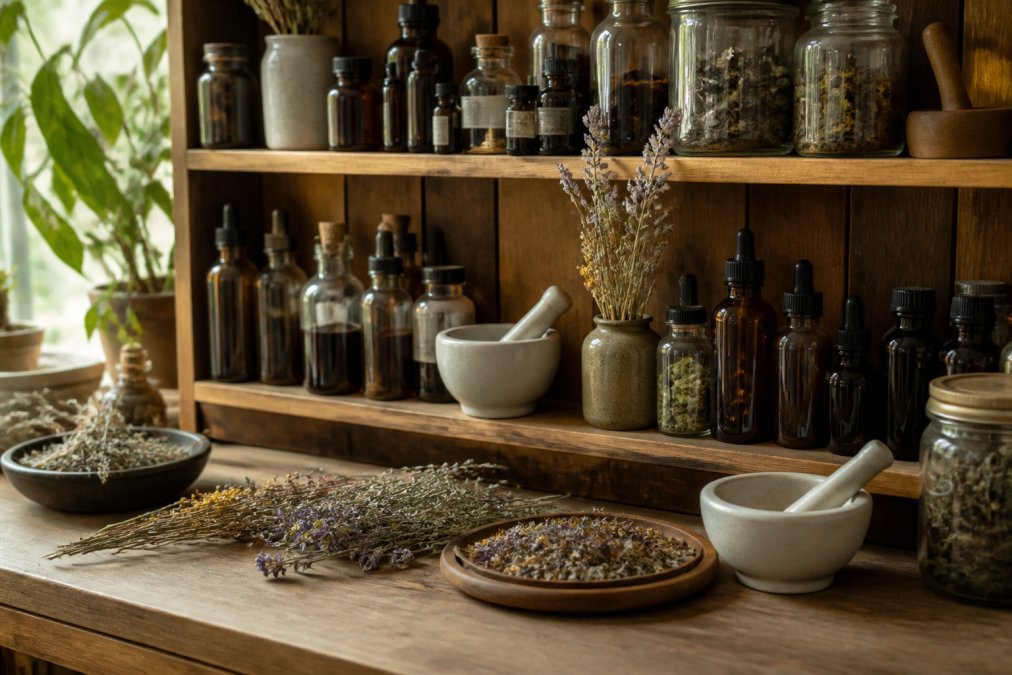
- Cleaning: a soap bar, laundry powder, and a scrub brush
- Skin care: one liquid hand and body soap, one treatment oil
- First aid and living goods: an Aloe Vera plant on the windowsill
- Atmosphere: one candle for daily use, one for seasonal styling
Best Practices for Storing Herbal Apothecary Goods
Storage decides how long your goods last, and the wrong container quietly ruins a good product. Light, heat, oxygen, and moisture degrade botanical and oil-based goods fastest, so block all four at once.

Match the Container to the Contents
Not every apothecary good wants the same jar. Experienced keepers sort storage by what the product is made of:
- Liquid soaps and washes: the original bottle is usually fine, but keep it off the tub ledge where steam and heat cycle through it daily.
- Candles: a cool, dark shelf. Heat pulls fragrance oils out of wax before you ever light the wick.
Shelf Life: What Actually Expires
Apothecary goods are not shelf-stable forever, and shelf life depends on the ingredient, not the label. As general guidance:
- Candles: scent throw and burn quality degrade over time even when the candle looks fine. Stored away from direct sun, a coconut apricot soy wax candle holds its scent profile, amber, sandalwood, leather, and musk, in the case of the Spooky Bitch Intention Candle, far longer than one left on a sunny windowsill.
Label Everything, With Dates
The highest-return habit in a home apothecary is labeling. Write the contents and the date you opened or made it on every container.
Habits That Make a Real Difference
- Cap bottles tightly after every use, oxygen is a slow thief
- Store oils and salves in a cool, dark cabinet, not above the stove
- Keep dry powders and bulk herbs in airtight containers, away from the dishwasher's steam
- Check candles for dust before burning and trim wicks to a quarter inch
- Rotate stock: move older items to the front so you use them first
Organic Herbal Apothecary Supplies and Safety Standards
Organic herbal apothecary supplies should arrive with documentation, not just a label: a verifiable certification and an ingredient list that names every input. This is where a little knowledge separates a safe home shelf from a risky one.
Verifying an Organic Claim
The USDA National Organic Program oversees organic certification, and any product sold as organic in the United States must meet its standards. If a seller claims organic status, the certifier should be identifiable. That single check filters out most misleading listings.
A few practical notes on reading organic claims:
- "Certified organic" means a USDA-accredited certifier has verified the product against the National Organic Program standards. The certifier's name should be on the label or available on request.
- "Made with organic ingredients" is a different, weaker claim than "certified organic", it does not mean the whole product is organic.
- "Natural," "clean," and "botanical" are marketing terms, not regulated certifications. They can be true, but they are not proof of anything on their own.
- For single-ingredient botanicals, ask for the country of origin and the lot or batch number. A seller who can produce those is running a real supply chain.
Safety Standards for Goods You Put on Your Body
Safety standards matter as much as sourcing. Look for products that state they are free of preservatives, phthalates, lead, and petroleum, and that disclose their full fragrance and oil content. The Spooky Bitch candle, for example, lists certified clean fragrance oils and a 100% natural coconut apricot soy wax base.
Handling and Shelf Life of Homemade Preparations
If you make your own tinctures, salves, or infused oils, or buy from a small maker who does, safe handling and realistic shelf life matter more than the label.
- Clean and dry first. Any tool or container that touches a preparation should be clean and fully dry. Water introduced into an oil-based product is the most common cause of spoilage.
- Water-based preparations are the risky ones. Tinctures, salves, and balms made with oil or alcohol resist microbes far better than anything containing water. Infused sprays, hydrosols, and homemade lotions have the shortest shelf life and are the most likely to grow mold or bacteria.
- Refrigerate what you can. Small-batch water-based preparations last noticeably longer refrigerated, and a small batch you finish in weeks beats a large batch you lose in months.
- Watch for the warning signs. Off smells, color changes, separation, or surface growth mean discard, not "use it up faster."
- Label with a date. Every homemade preparation should carry the date it was made and, if you know it, a realistic use-by window.
Regulatory Reality for Small Makers
Small apothecary makers operate under real rules, and buyers benefit from knowing the basics. The FDA's guidance on cosmetics and soap labeling explains how soap and cosmetic products are classified and what labeling is required. A maker who labels accurately and can explain how their product is classified is a maker worth buying from.
How to Verify Authentic Apothecary Products Before You Buy
Verification comes down to five checks that take about two minutes. Run them before you add anything to a cart.
- Named ingredients: every material is listed, not hidden behind "fragrance" or "blend"
- Named maker or origin: the listing says who made it and where
- Batch or production method: small-batch, hand-poured, or handcrafted is stated plainly
- Certification where claimed: organic or clean claims point to a real certifier
- Specifics: weight, volume, burn time, or size are given in real numbers
Frequently Asked Questions
What should I look for when buying authentic apothecary products?
Look for clear ingredient lists, named materials, and production details. Authentic apothecary products list specifics like 100% natural coconut apricot soy wax, certified clean fragrance oils, or organic laundry powder, rather than vague claims. Check whether the seller describes sourcing, batch size, and origin. A product page that names the maker, the materials, and the batch size gives you something concrete to verify. Vague terms like 'therapeutic grade' without a definition are a warning sign.
How do I build a basic apothecary kit for my home?
Start with a few multi-purpose items. For ready-made goods, a natural soy candle, a plant-based soap, and an aloe plant cover scent, cleansing, and first-aid basics. Build around what you actually use weekly rather than buying a full kit at once.
Are there specific standards for natural apothecary ingredients?
There is no single federal standard for the term 'natural apothecary.' Organic claims fall under the USDA National Organic Program, which certifies farms and handlers rather than finished craft goods. The FDA regulates cosmetics and drugs separately, and soap is classified differently from a drug or cosmetic. Because the rules split by product type, the most reliable signal is a seller who states exactly what is in the product and how it was made.
Where can I buy home apothecary supplies?
Specialty shops that curate small-batch goods are a strong starting point. General Store 34: Dry Goods & More stocks apothecary-adjacent items including the Spooky Bitch Intention Candle at $29.99, the Ghost Candle at $15.00, the Green Llama Travel Laundry & Soap Bundle at $29.95, Aloe Vera at $15.00, and Nest New York liquid soaps at $28.00. Each listing names materials and production details, which helps you judge authenticity before ordering.
What is the difference between a herbalist and an apothecary?
A herbalist is a person who studies and works with plants for wellness. An apothecary historically referred to the place where preparations were made and sold, and today it usually describes a shop or a home collection of botanicals, tinctures, and salves. When you stock a home apothecary, you are building the physical setup, while a herbalist is the practitioner. The two overlap, but one is a role and the other is a space.
Buying authentic apothecary goods means slowing down and checking the details most shoppers skip. That is the entire method behind General Store 34: Dry Goods & More: a carefully curated selection, every item personally reviewed, and an approach rooted in timeless craftsmanship and enduring character. Shop now and build a shelf of goods that actually hold up.