Table of Contents
- Why Everyday Essentials Deserve More Thought Than You Give Them
- Kitchen Essentials: Cookware and Tools Built to Last
- Sustainable Kitchen Essentials That Reduce Waste Daily
- Eco-Friendly Home Cleaning Supplies That Actually Clean
- Bedroom and Bedding Basics: Where Comfort Meets Durability
- Bathroom and Personal Care Items Worth the Investment
- Storage, Organization, and Home Fragrance: The Finishing Layer
- How to Choose Everyday Essentials for Small Spaces and Tight Budgets
- Frequently Asked Questions
Last Updated: September 15, 2026
Why Everyday Essentials Deserve More Thought Than You Give Them
Most people buy everyday essentials twice: once cheaply, then again properly. That replacement cycle is the real cost hiding in your cabinets, and it is why the best everyday essentials for home are worth choosing deliberately. This guide from General Store 34: Dry Goods & More covers the categories that earn their place, and where spending more upfront pays you back.
Everyday essentials are the durable and consumable goods you reach for daily: cookware, cleaning supplies, bedding, towels, personal care items, and storage. They absorb daily wear in a way decorative pieces never do.
Here is the part most checklists skip: an essential is defined not by price but by how often you touch it. A pan you use four times a week deserves more scrutiny than a vase you look at monthly.
Below, we break down what to buy, what to skip, and how to tell the difference before you spend.
Kitchen Essentials: Cookware and Tools Built to Last
The kitchen is where cheap goods fail fastest. Heat, oil, and daily washing destroy thin coatings and flimsy handles within a year or two, making cookware the first place to spend deliberately.
The Cookware That Earns Its Counter Space
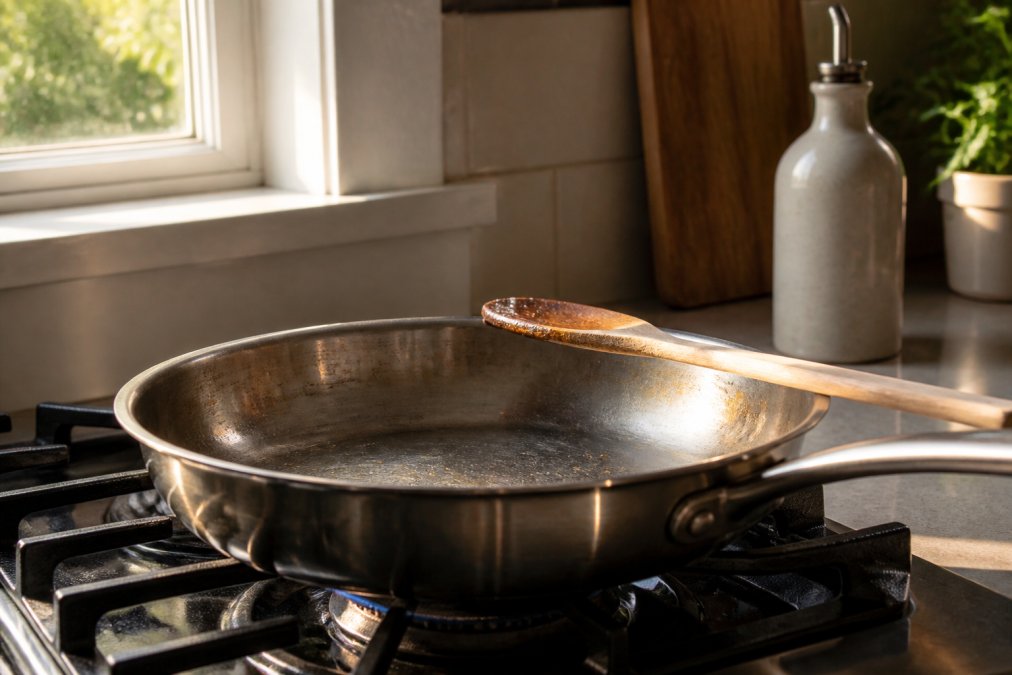
A clad stainless steel frying pan is the single most useful piece in most kitchens. Five bonded layers spread heat through the base and sidewalls, reducing the hot spots that scorch food in cheaper pans. The 18/10 cooking surface develops proper searing and fond for pan sauces, with no coating to wear away.
The 5-Ply Stainless Steel Frying Pan from General Store 34 is built exactly this way: induction-compatible, oven-safe to 500°F, and free of PFAS, PTFE, PFOA, lead, and cadmium. It costs $149, which sounds steep until you divide it across a decade of daily use.
What most guides miss is that uncoated stainless has a learning curve. Preheat the pan before adding oil, then let food release naturally before you flip it.
Small Kitchen Tools That Do Real Work
A porcelain oil dispenser keeps oil fresh by blocking the light that causes oxidation, and its sealed spout pours without dripping. The Elixir Porcelain Olive Oil Dispenser ($65) holds 24 ounces, is dishwasher safe, and is made from lead-free glazed porcelain.
| Item | Price | Why It Lasts | Best For |
|---|---|---|---|
| 5-Ply Stainless Steel Frying Pan | $149.00 | Five bonded layers, no coating to wear | Daily searing and pan sauces |
| Elixir Porcelain Olive Oil Dispenser | $65.00 | Opaque glazed porcelain, sealed spout | Countertop oil storage |
Sustainable Kitchen Essentials That Reduce Waste Daily
Waste in the kitchen rarely comes from cooking. It comes from packaging, and the fix is refilling rather than rebuying. Sustainable kitchen essentials work best when they replace a disposable item outright: a refillable glass bottle paired with a compostable refill pouch removes a plastic bottle from your bin every time you restock.
The Expert Home Cleaner Kit ($99.95) puts this into practice with three refillable glass bottles and 13 essentials covering kitchen, bathroom, glass, laundry, and dishes. It includes 60 loads of laundry powder and 40 dishwasher tabs, and the naturally derived formulas mean you are not holding your breath while scrubbing.

Buying the pieces separately costs over $30 more, which is the rare case where the bundle is also the cheaper route.
Eco-Friendly Home Cleaning Supplies That Actually Clean
Eco-friendly home cleaning supplies have a reputation problem: people assume they trade performance for safety. That tradeoff is mostly a myth from the early generation of green cleaners. What separates a good eco-friendly cleaner is the ingredient list, not the marketing. Naturally derived formulas lift grease and soap scum without chlorine or ammonia, and the practical test is simple: if you can scrub a shower without opening a window, the formula is doing its job.
Consumables matter here more than durables. Dishwasher tabs, laundry powder, and spray refills run out on a schedule, so the format you buy them in determines how much waste leaves your home each month. Compostable refill pouches beat plastic bottles every time.
Bedroom and Bedding Basics: Where Comfort Meets Durability
Bedding is the category where people most often buy on looks and regret it within a year. Sheets pill, toppers flatten, and blankets shed. The fix is understanding fiber and weave before you buy.
Percale weave is the detail worth knowing: a tight, plain weave that sleeps cool and holds up to repeated washing better than sateen, which is why hot sleepers prefer it. The Organic Percale Bed Sheets Set ($54.99) is 100% GOTS-certified organic cotton, breathable and hypoallergenic, and comes complete with flat sheet, fitted sheet, and pillowcases.
For the mattress itself, a topper is a cheaper intervention than a new bed. The 2 Inch Thick Hypoallergenic Mattress Topper ($79.99) adds two inches of microfiber and down-alternative fill, fits mattresses up to 18 inches deep, and protects against spills, stains, and allergens.
Layer a Velvet Plush Sherpa Luxury Bed Blanket ($54.99) on top. Velvet plush on one side, sherpa on the reverse, and machine washable enough to survive kids and pets.
Bathroom and Personal Care Items Worth the Investment
Bathrooms are small, humid, and used multiple times a day, making them the harshest environment in the house for anything made of fabric, metal, or adhesive. Bathroom essentials fail faster than almost any other category, pick them for how they handle moisture, not how they look on a shelf.
Towels: Construction Beats Thread Count
Towels are the most replaced item in most bathrooms, and the reason is almost always construction rather than use. Thread count is a marketing number; fiber length and pile density determine performance.
Long-staple cotton, labeled Egyptian, Supima, or Turkish, has fewer fiber ends per yarn, so less lint, less pilling, and a surface that stays soft through hundreds of washes. Short-staple cotton feels plush in the store and goes stiff and thin within a year.
The 100% Cotton Checkered Jacquard Bath Towel Set ($49.99) uses a woven jacquard texture that adds visual interest without pattern, and the durable construction is designed to keep its look between washes.

Bath Mats and Shower Liners: The Two Items Everyone Forgets
Personal Care: Buy Fewer, Replace on Function
Three items reward a deliberate purchase:
Storage, Organization, and Home Fragrance: The Finishing Layer
The Small-Space Storage Rule
Entryway and Mudroom: The Highest-Traffic Zone
Home Fragrance: The Finishing Layer
How to Choose Everyday Essentials for Small Spaces and Tight Budgets
Budget-Tier vs. Buy-It-For-Life: What the Math Actually Shows
| Approach | Upfront | Replacement Cycle | Best For |
|---|---|---|---|
| Budget-tier | Lower | Every 1-2 years | Rarely used items |
| Buy-it-for-life | Higher | Years of daily use | Cookware, bedding, towels |
| Refillable systems | Moderate | Refill pouches only | Cleaning consumables |
Frequently Asked Questions
What are the everyday essentials every home actually needs?
Start with cookware you will use daily (a stainless steel frying pan and a quality oil dispenser), cleaning supplies that cover kitchen and bathroom, bedding you can wash easily, and a first aid kit. The best everyday essentials for home are items you touch constantly, so quality matters more than quantity. A 5-ply stainless pan at $149 or an Expert Home Cleaner Kit at $99.95 replaces a shelf full of disposable alternatives.
How do I choose sustainable kitchen essentials without overspending?
Look for items that replace repeat purchases. A porcelain oil dispenser ($65) ends the cycle of buying plastic bottles, and refillable glass cleaner bottles mean you buy compostable pouches instead of new plastic. GOTS-certified organic cotton sheets ($54.99) are another example: certified sourcing plus durability means fewer replacements over time. Sustainable kitchen essentials pay back when they outlast three or four cheap versions.
Are eco-friendly home cleaning supplies as effective as conventional ones?
Yes, when formulated well. The Expert Home Cleaner Kit ($99.95) includes 13 items covering kitchen, bathroom, glass, laundry, and dishes, with 60 loads of laundry powder and 40 dishwasher tabs. Naturally derived ingredients mean you are not breathing harsh fumes while scrubbing. The kit costs over $30 less than buying the pieces separately, so the eco-friendly option is also the cheaper one in this case.
What is the difference between budget-tier and buy-it-for-life home essentials?
Budget items cost less upfront but get replaced every year or two. BIFL items cost more once and last a decade or longer. A $149 5-ply stainless pan with no coating to wear away will outlast three $50 nonstick pans that lose their surface. The same logic applies to towels, sheets, and cleaning tools. Run the math over five years, not one purchase, and the durable option usually wins.
How do I pick everyday essentials for a small apartment?
Prioritize multi-purpose items and vertical storage. A wall diffuser ($54) adds fragrance without taking counter space. A 2-inch hypoallergenic mattress topper ($79.99) upgrades an older mattress instead of replacing it, which matters when moving is likely. Velvet furniture protectors ($39.99) refresh a couch without buying new furniture. In small spaces, every item should do at least two jobs or store flat.