Table of Contents
- Why Handcrafted Gifts Stand Out in 2026
- Sustainable Handmade Gift Ideas That Last
- How to Identify Quality Craftsmanship Before You Buy
- Personalized Handcrafted Gifts for the Home
- Budget-Friendly and Beginner DIY Gift Ideas
- Handmade Holiday Gifts for Family and Coworkers
- Frequently Asked Questions
Last Updated: September 14, 2026
Why Handcrafted Gifts Stand Out in 2026
The best handcrafted gifts for 2026 share one trait: they carry evidence of human attention. In a market saturated with mass-produced items, buyers are increasingly drawn to objects that show the maker's hand, from uneven glaze lines on a ceramic mug to the visible stitching on a quilted throw. This guide from General Store 34: Dry Goods & More walks through what makes a handcrafted gift worth giving, how to spot real quality, and where to find pieces that last beyond the holiday season.
Handcrafted gifts are items made or finished by hand in small batches, where the maker's skill shapes the final product rather than a production line. That distinction matters because it changes how the object ages. A hand-thrown bowl chips differently than a factory-molded one. A naturally dyed textile fades into something softer rather than turning gray.
The shift toward handmade and artisan goods reflects a broader move among mindful consumers toward durability, provenance, and sustainable sourcing. Below, we break down the categories that matter most, plus a framework for judging craftsmanship before you spend.
Sustainable Handmade Gift Ideas That Last
Sustainable handmade gift ideas prioritize materials that age well and supply chains you can trace. The goal is a gift that stays in use for years, not one that looks charming for a season and then sits in a drawer.
Upcycled and Repurposed Materials
Upcycled gifts turn existing materials into something new: a candle poured into a reclaimed glass jar, a tote sewn from vintage feed sacks, a notebook bound with salvaged leather. These pieces carry a story, and that story is often the gift itself.
A common mistake is assuming "upcycled" automatically means durable. It does not. The quality depends on how the maker reinforced the material. Look for double-stitched seams on repurposed textiles and clean, sealed edges on reclaimed wood.
Eco-Conscious Crafting and Sourcing
Eco-conscious crafting means choosing materials with a lighter footprint: natural fibers, low-impact dyes, reclaimed wood, and finishes that avoid harsh solvents. For buyers, the practical question is provenance. If a listing does not say where the wool came from or how the wood was finished, ask.
How to Identify Quality Craftsmanship Before You Buy
Quality craftsmanship shows up in the details you can inspect in a photo or in person. According to the Federal Trade Commission's guidance on "Made in USA" and origin claims, sellers must be able to substantiate claims about where and how a product is made, which gives you a legitimate basis to ask questions before purchase.
Here is a practical checklist for evaluating a handcrafted piece:
- Joints and seams: Look for tight, consistent stitching or clean joinery. Loose threads and visible glue are warning signs.
- Weight and balance: A well-made ceramic mug feels balanced in the hand. A flimsy one feels hollow and light.
- Finish consistency: Glaze, oil, or wax should be applied evenly. Patchy finishes wear unevenly.
- Symmetry where intended: Handmade does not mean crooked. If a piece is meant to be round, it should be round.
- Maker's mark or signature: A signed piece signals the maker stands behind their work.
- Material honesty: The listing should name the actual materials, not vague terms like "premium blend."
| What to Check | Warning Sign | Why It Matters |
|---|---|---|
| Seams and joints | Loose threads, visible glue | Shortens usable life |
| Weight and balance | Feels hollow, tips easily | Signals thin or cheap material |
| Finish | Patchy glaze or wax | Wears unevenly with use |
| Sourcing | No material details listed | Hard to verify durability |
| Maker's mark | Unsigned, anonymous | No accountability for defects |
What most guides miss is that a single flaw is not disqualifying. Handmade objects carry small irregularities by nature. The question is whether the irregularities are cosmetic or structural. A slightly uneven rim on a bowl is character. A hairline crack near the base is a future leak.
Personalized Handcrafted Gifts for the Home
Personalized handcrafted gifts for the home turn a useful object into something the recipient keeps on display. Monogrammed linens, custom-glazed dinnerware, and engraved wooden boards all fall into this category, and they tend to get used far more than purely decorative items.
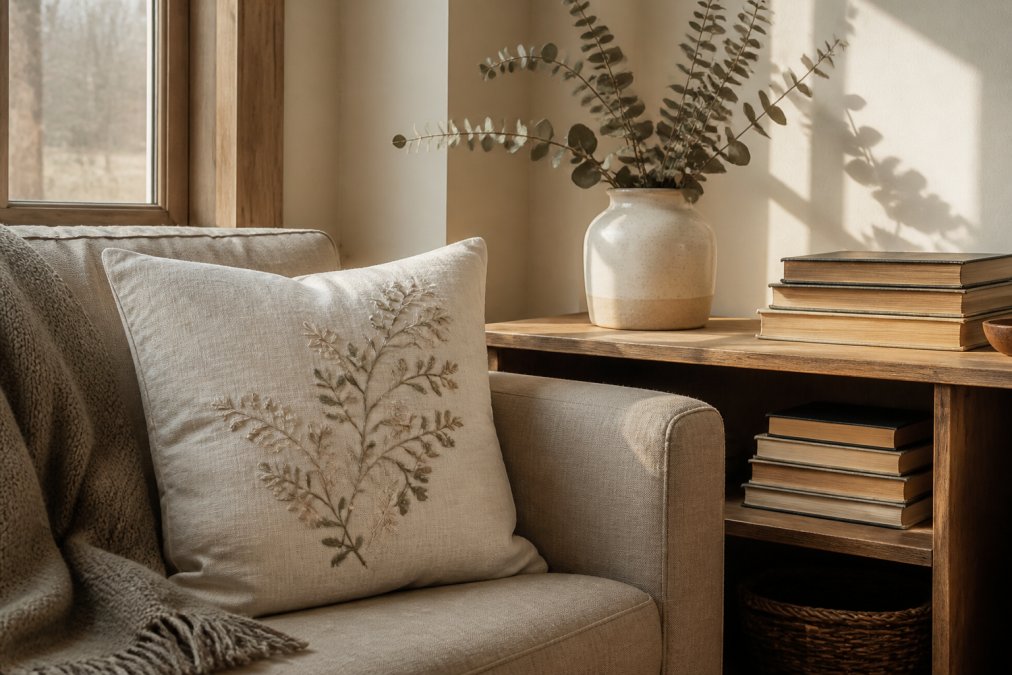
Textiles, Ceramics, and Botanical Decor
Textiles, ceramics, and botanical decor are the three home categories that hold up best as gifts, because each combines function with visual warmth.
Textiles, such as handwoven throws, embroidered pillow covers, and quilted table runners, soften a room and get daily use. Ceramics, including mugs, serving bowls, and planters, are the most-gifted handmade item for good reason: they are practical and personal. Botanical decor, from dried arrangements to herbarium prints, brings a natural element indoors without requiring care.
At General Store 34: Dry Goods & More, every item is personally reviewed before it reaches the shelf, so the piece you gift has already passed a quality check.
Budget-Friendly and Beginner DIY Gift Ideas
Budget-friendly crafting comes down to three variables: material cost, time investment, and how many you can batch at once. Most guides list projects without telling you what they actually cost or how long they take. This section does both, organized by the two constraints that matter most to gift-makers in 2026: budget and schedule.
Under $10 Per Gift
These projects rely on inexpensive base materials you can buy in bulk. Per-gift cost assumes you are making a batch of six or more and splitting the supplies.
- Infused bath salts: Epsom salt, a carrier oil such as fractionated coconut or jojoba, and a few drops of essential oil, layered in a glass jar with a handwritten tag. Roughly $3-$5 per jar at batch size.
- Dried herb bundles: Rosemary, lavender, or sage bundled with twine and air-dried.
Under $20 Per Gift
15-Minute Crafts vs. Weekend Projects
| Project | Active Time | Cure/Rest Time | Skill Level |
|---|---|---|---|
| Infused bath salts | 10-15 min | None | Beginner |
| Dried herb bundles | 10 min | 1-2 weeks drying | Beginner |
| Botanical note cards | 15-20 min | 1 hour pressing | Beginner |
| Embroidered tea towels | 45-90 min | None | Beginner |
| Infused syrup or vinegar | 20 min | 1-2 weeks steeping | Beginner |
| Hand-poured candles | 30-45 min | 24-48 hours | Beginner |
Easy Projects for First-Time Crafters
Handmade Holiday Gifts for Family and Coworkers
Gifts for Family
Strong family picks by relationship:
Gifts for Coworkers
Wrapping and Presentation
Frequently Asked Questions
What makes a gift considered handcrafted versus mass-produced?
A handcrafted gift is made by an individual artisan or small workshop, with each piece shaped, stitched, thrown, or assembled by hand. Mass-produced items come off automated lines with identical results every time. The difference shows in small variations: a slightly uneven glaze, hand-stitched seams, or a maker's mark. When shopping for handcrafted gifts, look for provenance details like the maker's name, the workshop location, and the materials used. These signals separate genuine artisan work from factory items styled to look artisanal.
How do I choose high-quality handcrafted gifts that will actually last?
Start with materials. Solid wood, stoneware, linen, and full-grain leather outlast particle board, thin glazes, and synthetic blends. Check construction details: tight joinery, reinforced stitching, and food-safe finishes signal durability. Ask whether the maker stands behind the work with a repair or replacement policy. Reading reviews that mention longevity helps too. A handcrafted piece should feel substantial in hand and show consistent finishing on edges and undersides, not just the visible surfaces.
What are the top handcrafted gift trends for 2026?
Personalized home decor leads the list, especially ceramics, embroidered textiles, and custom woodwork. Sustainable handmade gift ideas are also surging, with upcycled materials and botanical skincare gaining ground. Shoppers want pieces that serve a daily purpose, like hand-poured candles, herbarium prints, and small-batch apothecary items. Batch crafting and gift tags made by hand round out the trend. The throughline is thoughtful, functional items with a story, not disposable novelty goods.
Are handmade gifts more expensive than store-bought options?
Handcrafted gifts often cost more than mass-produced alternatives because you pay for the maker's time, quality materials, and small-batch production. Pricing depends on the craft, materials, and the artisan's experience. What you get in return is a durable, unique piece rather than a disposable item. For budget-conscious shoppers, smaller handcrafted items like candles, soaps, or printed art offer an accessible entry point. Check the maker's website for current prices and options that fit your budget.
Finding handcrafted gifts that genuinely last means looking past the aesthetic and checking the construction, the materials, and the maker behind them. General Store 34: Dry Goods & More personally reviews every product for quality, curates a selection built on timeless craftsmanship, and focuses on goods with enduring character rather than short-lived trends. Shop now at General Store 34: Dry Goods & More to find authentic pieces for the people on your list.