Table of Contents
- What Counts as Handcrafted Dry Goods in 2026
- Quick Comparison: 8 Handcrafted Pieces Worth Buying
- Martinez and Arturo Blankets: Handwoven Cotton Throws at $110
- Linen Tales Waffle Towel Set, Oaxacan Blessing Beads and Palma Baskets
- Japanese Crystal Glassware for Whisky and Wine
- Artisanal Pantry Staples and Small-Batch Sourcing
- How to Store Dry Goods So They Last
- How We Evaluated These Handcrafted Dry Goods
- Frequently Asked Questions
Last Updated: September 17, 2026
What Counts as Handcrafted Dry Goods in 2026
Handcrafted dry goods are non-perishable home and pantry items made by individual artisans or small workshops rather than factories, including handwoven textiles, hand-thrown ceramics, woven baskets, and small-batch pantry staples. At General Store 34: Dry Goods & More, we personally review every piece before it reaches the shelf, because the gap between genuine artisan work and a factory product with a rustic label has never been wider. If you want to buy handcrafted dry goods online, the challenge isn't finding options. It's telling them apart.
The category covers more ground than most shoppers expect. Textiles, homewares, decorative ceramics, and artisanal pantry staples all qualify, provided a human hand shaped the final product and the maker can be named. That last part matters. A "handcrafted" claim with no maker behind it is a marketing decision, not a fact.
How to Spot Genuine Artisan-Made Work
Look for three signals: a named maker or workshop, small-batch production language, and honest disclosure of variation. If a product page shows ten identical units in ten identical photos, question the claim.
- Named provenance: "Martinez, second-generation weaver in Mitla" beats "ethically sourced."
- Stated materials: 100% cotton, natural palm, pit-fired clay. Vague fiber blends hide factory output.
- Declared variation: Genuine artisan goods vary slightly. Uniformity is a red flag.
- Care instructions: Real makers tell you how to maintain the piece because they expect it to last.
Quick Comparison: 8 Handcrafted Pieces Worth Buying
| Product | Price | Material | Best For |
|---|---|---|---|
| Martinez Blanket | $110.00 | 100% cotton, handwoven | Throws, beach, picnics |
| Arturo Blanket | $110.00 | 100% cotton, handwoven | Couches, beds, gifting |
| Linen Tales Waffle Towel Set | $81.00 | 53% linen, 47% cotton | Bathroom, travel |
| Oaxacan Blessing Beads | $52.00 | Pit-fired clay, wool tassel | Mantels, shelves, gifts |
| Palma Handwoven Basket | $48.00 | Natural palm | Storage, plants, market |
| Hoshi Crystal Whisky Glass | $64.95 | Japanese crystal | Whisky drinkers |
| Kami Rotating Wine Glass | $74.95 | Japanese crystal, wood | Wine service |
| Yama Crystal Whisky Glass | $74.95 | Japanese crystal | Whisky, entertaining |
Martinez and Arturo Blankets: Handwoven Cotton Throws at $110
Both blankets come from the same weaving tradition in Mitla, Mexico, and both sell for $110.00, but they aren't interchangeable. Martinez is named for a second-generation artisan working the flying shuttle loom in a family workshop. Arturo is named for a master artisan whose cooperative employs weavers from the surrounding village.

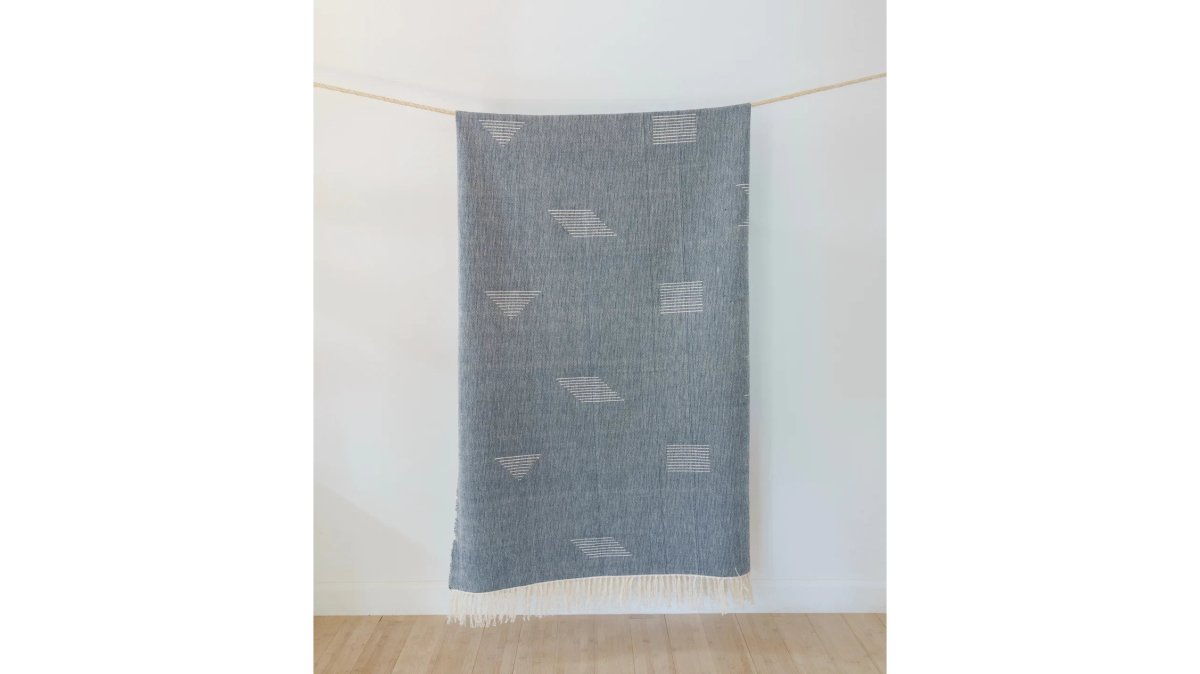
Each throw measures 71" x 62" and uses 100% cotton dyed with sustainable, non-toxic colors. Use them as a couch throw, a bed layer, or a picnic spread. Because they're one-of-a-kind handcrafted goods, expect slight variations between units.
The practical difference is care. The Martinez Blanket is machine wash and hang dry. The Arturo Blanket tolerates machine wash, tumble dry, and hang dry, which makes it the easier pick for a household that actually uses its throws.

Linen Tales Waffle Towel Set, Oaxacan Blessing Beads and Palma Baskets
Three pieces anchor the homewares side of the collection, and each solves a different problem.
Japanese Crystal Glassware for Whisky and Wine
What separates a $64.95 whisky glass from a $10 tumbler? Hand-finishing, balance, and the way the vessel releases aroma. The Hoshi, Tychon, and Yama glasses each sell for $64.95, and the Kami Rotating Crystal Wine Glass & Wooden Coaster runs $74.95.
Artisanal Pantry Staples and Small-Batch Sourcing
Small-batch sourcing is what separates artisanal pantry staples from supermarket shelf fillers. The principle is simple: fewer intermediaries, named producers, and batches small enough that a human inspects the output.
- Does the listing name the producer or region?
- Are ingredients or materials listed in full?
- Is there a stated care or storage method?
- Do reviews mention variation between units?
- Does the seller explain what "curated" means in practice?
How to Store Dry Goods So They Last
Start with the two forces that damage artisan goods faster than daily use: humidity and ultraviolet light. A dry, dark interior closet or cabinet can be suitable for long-term storage. If a piece lives on display, rotate it out of direct sun every few weeks rather than leaving it in one spot for months.
Textile Care by Fiber
- Handwoven cotton (Martinez and Arturo blankets): Machine wash cold on a gentle cycle, then either hang dry (Martinez) or tumble dry low (Arturo). Wash separately for the first two cycles, since natural dyes can release slightly. Skip fabric softener.
- Linen-cotton blends (Linen Tales waffle towels): Wash warm with like colors, avoid bleach, and tumble dry low. The stone-washed honeycomb weave softens further with use.
- Wool accents (Oaxacan Blessing Beads tassel): Cold hand wash only, then lay flat to dry away from heat. Never wring a hand-spun wool tassel.
Ceramics, Glass, and Natural Fiber Baskets
Pit-fired clay like the Oaxacan beads is fragile by design, not by defect. Keep the strand hung or laid flat rather than coiled tight, and store it away from hard surfaces that can chip the bead edges. Hand-wash only, and dry immediately.

Pantry Staples
How We Evaluated These Handcrafted Dry Goods
The word "artisanal" carries no legal weight in the United States, so any seller can print it on a label.
The Four-Point Authenticity Check
Before you buy handcrafted dry goods online, run any listing through these four questions. A genuine artisan product passes all four. A mass-produced item dressed in rustic marketing usually fails at least two.
- Is the maker named? "Martinez, second-generation weaver in Mitla" is verifiable. "Ethically sourced" and "artisan-inspired" are not. If the product page can't name a person, a family, or a named workshop, treat the handcrafted claim as unproven.
- Is the material composition stated in full? 100% cotton, natural palm, pit-fired clay, and Japanese crystal are specific. "Premium blend" and "natural fibers" hide factory output behind vague language.
- Does the listing admit variation? Genuine handwork varies slightly from unit to unit. Ten identical units in ten identical photos is a red flag, not a sign of quality control.
- Does the seller publish care instructions? Real makers tell you how to maintain the piece because they expect it to last. A listing with no care guidance is usually a listing with no maker behind it.
How We Weighted the Criteria
Material sourcing carried the most weight. Natural fibers, non-toxic dyes, and certified fabric were considered. Construction came second.
Value at price was the tiebreaker.
Frequently Asked Questions
How do I verify that handcrafted dry goods online are genuinely artisan-made?
Look for the details that mass production cannot fake. A listing that names the maker or workshop, states the loom, material or firing method, and admits that sizes and hues vary slightly is describing real handwork. Sustainable, non-toxic dyes and hand-finished edges are further signals. Ask the seller directly about material sourcing and production methods before you buy. If a store cannot answer, treat the 'handcrafted' label as decoration.
Are handcrafted dry goods more sustainable than mass-produced alternatives?
Many artisan pieces use natural materials and sustainable, non-toxic dyes. The sustainability case rests on durability as much as materials: a handwoven cotton blanket used for a decade can offer lasting value. Check certifications and sourcing claims before assuming.
How should I store dry goods to keep them fresh and in good condition?
How you store dry goods depends on the material. Textiles should be folded, not hung, and stored somewhere dry; a handwoven cotton throw or linen towel set stays fresh when it can breathe. Woven palm baskets should be wiped with a dry cloth and kept away from moisture. Always follow the care label on the item.
Why do handcrafted dry goods cost more than mass-produced versions?
You are paying for time, skill and provenance. A blanket handwoven on a flying shuttle loom by a second-generation workshop takes hours of labor that a factory line does not. Prices reflect materials such as 100% cotton with sustainable dyes, fair payment for artisans, and the fact that no two pieces are identical. The trade-off is durability and character. A $110 handwoven throw that lasts years often costs less per year of use than three cheap replacements.
What are artisanal pantry staples, and where do they fit in a handcrafted home?
Artisanal pantry staples are small-batch food and kitchen goods made by independent producers: preserves, spice blends, oils, honey and dry ingredients sourced with the same care as handmade textiles. They pair naturally with handcrafted homewares, since both prioritize material sourcing and traceable production over volume. Buying them online works best when the seller publishes origin details. Store them in airtight containers away from heat and light to protect flavor.
Buying handcrafted dry goods online comes down to one question: can you name the person who made it? If the answer is no, you're paying artisan prices for factory output. General Store 34: Dry Goods & More answers that question on every listing, with named makers, stated materials, and honest care instructions, from handwoven cotton blankets to pit-fired clay beads. Shop now and build a home collection where every piece has a provenance you can trace.