Table of Contents
- What Counts as Curated Dry Goods in a Modern Kitchen
- The Pantry Essentials Checklist: Building Your Curated Dry Goods Collection
- The Best Dry Storage Containers for Airtight, Shelf-Stable Organization
- Pantry Organization Tips for Long-Term Dry Goods Storage
- How to Buy Handcrafted Dry Goods Online With Confidence
- Kitchen Tools That Make Curated Dry Goods Worth Buying
- Budget-Friendly vs. Premium Curation: What You're Actually Paying For
- Frequently Asked Questions
Last Updated: September 23, 2026
What Counts as Curated Dry Goods in a Modern Kitchen
Curated dry goods are shelf-stable pantry ingredients selected with intention rather than convenience: whole grains, legumes, spices, and artisanal staples chosen for quality, provenance, and how well they hold up in storage. At General Store 34: Dry Goods & More, we review every item personally before it earns shelf space.
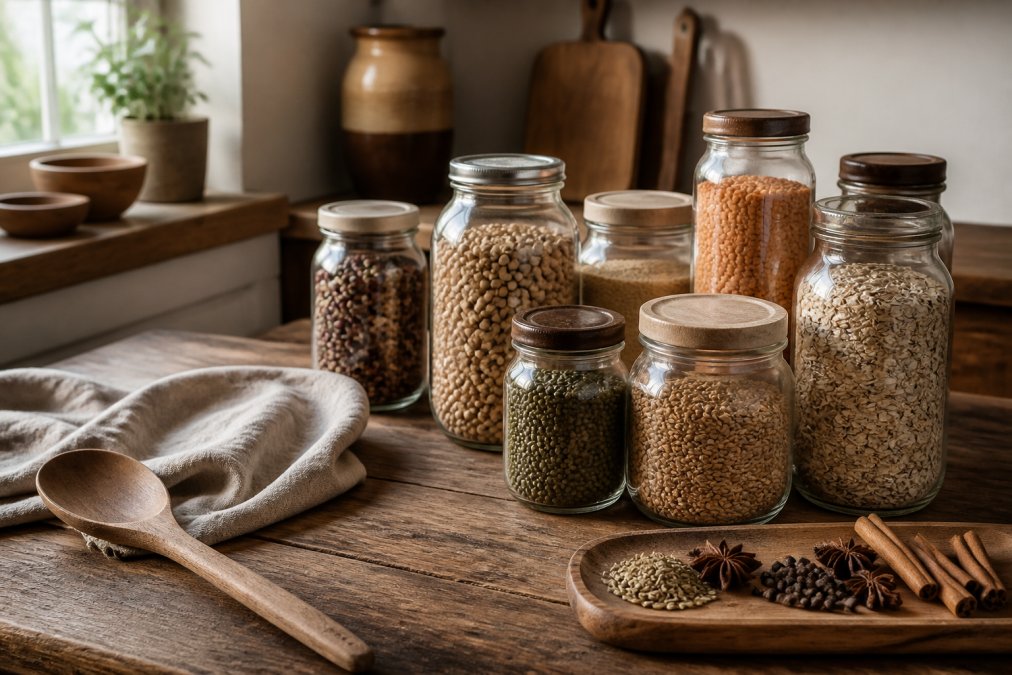
- Traceable origin. You can name the farm, region, or producer.
- Turnover. Smaller quantities bought more often beat bulk buys that sit for years.
- Storage discipline. Good containers and a working inventory system, covered below.
The Pantry Essentials Checklist: Building Your Curated Dry Goods Collection
A working pantry covers three jobs: bulk nutrition, flavor, and finishing. Start with the checklist below, then adjust to how you actually cook.
Whole Grains, Legumes, and Flavor-Enhancing Staples
Whole grains and legumes form the backbone of a curated dry goods collection because they store well, cook predictably, and anchor most meals. Think farro, arborio rice, dried chickpeas, and French green lentils.
Artisanal Ingredients and Spices Worth the Shelf Space
Spices and artisanal ingredients are where curation pays off most, because freshness fades fast and pre-ground versions lose their edge quickly. Whole spices, cracked fresh in a mortar, deliver noticeably more aroma than anything that sat ground on a shelf.
The Best Dry Storage Containers for Airtight, Shelf-Stable Organization
The best dry storage containers are airtight, food-grade, and sized to how fast you use each ingredient. Clear glass or food-grade plastic with a true silicone gasket seal outperforms decorative jars with loose lids. But the reason a container works comes down to four things it has to block, and most guides skip that part entirely.
What Actually Degrades Dry Goods
Dry goods fail on four fronts, and each one calls for a different defense:
- Oxygen. Fats in whole grains, nuts, and spices oxidize on contact with air, producing the stale, cardboard-like note you taste in old flour. Nitrogen flushing and vacuum sealing slow this; a loose lid does not.
- Moisture. Grains and legumes are hygroscopic, they pull water vapor from humid air. Above roughly 60% relative humidity in the storage environment, mold and bacterial risk climbs, and texture suffers even before spoilage is visible.
- Light. Ultraviolet light accelerates oxidation of oils and fades the volatile compounds that give spices their aroma. This is why opaque or amber containers beat clear glass for long-term spice storage, even though clear looks better on a shelf.
- Pests. The Indianmeal moth and the cigarette beetle (the two most common pantry invaders in the U.S.) chew through thin plastic bags and cardboard but not through glass, metal, or heavy-gauge food-grade plastic with a gasket.
Food-Grade Materials and Airtight Seals That Protect Flavor
Food-grade materials matter because pantry goods absorb whatever surrounds them. A container that seals properly keeps moisture, pests, and odors out, and keeps volatile oils in.
| Container Type | Best For | Seal Quality | Watch Out For |
|---|---|---|---|
| Glass with gasket | Spices, small quantities | Excellent | Weight, breakage, light transmission |
| Food-grade plastic | Bulk grains, legumes | Good | Odor retention over time, scratches harbor bacteria |
| Ceramic with cork | Display, short-term | Moderate | Poor long-term seal, cork absorbs odors |
| Vacuum-sealed bags | Long-term bulk storage | Excellent | One-time use, no visibility into contents |
| Mylar with oxygen absorber | Emergency and long-term storage | Excellent | Not reusable, requires heat sealer |
Sizing Containers to Turnover, Not to Shelf Aesthetics
The single biggest storage mistake is buying containers for how they look rather than for how fast you empty them. A two-quart jar of cumin is a two-year supply for most households and will go stale long before it's gone. Match container size to a three-to-four-month consumption window, and you'll never open a jar of dead spice again.
Zero-Waste Refill Systems
If you want to cut packaging without giving up airtight storage, the refill model is the practical answer. Reusable glass or heavy plastic containers paired with bulk-bin refills at a co-op or a refill shop eliminate the single-use bag entirely. Bring your own tare-weighted containers, have them weighed at checkout, and fill from the bin. The container you already own becomes the packaging.
A few practical notes for anyone new to refilling:
- Weigh empty containers first and write the tare weight on the lid with a grease pencil.
- Dedicate one container per ingredient so you never cross-contaminate flavors.
- Keep a small funnel in your bag; bulk bins are messy without one.
- Buy only what fits in your existing containers, refilling is not an excuse to over-buy.
Pantry Organization Tips for Long-Term Dry Goods Storage
Pantry organization tips work best when they start with inventory rather than shelving. You cannot organize what you have not counted. But the deeper reason organization matters is shelf life: a well-organized pantry is one where you actually rotate stock, and rotation is what keeps dry goods from quietly expiring in the back of a cabinet.
How Long Dry Goods Actually Last
Shelf-life ranges below are typical for properly stored goods at cool room temperature in airtight containers. Heat, light, and humidity shorten every one of them.
| Ingredient | Typical Shelf Life | Notes |
|---|---|---|
| White rice | 2+ years | Most stable grain; low oil content |
| Brown rice | 6 months | Bran oils go rancid faster than any other common grain |
| Dried beans and lentils | 1-2 years | Older beans cook unevenly and stay tough no matter how long you simmer |
| Whole spices | 2-3 years | Aroma fades gradually; still safe, just dull |
| Ground spices | 6 months-1 year | Surface area accelerates volatile oil loss |
| Whole wheat flour | 3-6 months | Refrigerate or freeze for longer storage |
| Rolled oats | 1-2 years | Watch for a bitter, soapy smell, that's rancidity |
| Nuts and seeds | 6 months | Refrigerator or freezer extends to a year or more |
Pantry Inventory and Kitchen Workflow
A pantry inventory is a running list of what you own, how much remains, and when you bought it. Keep it simple: a note on your phone or a card taped inside the cabinet door. The point is not precision, it's that you know what you have before you shop.
A simple FIFO setup:
- Eye level: daily drivers, cooking oil, salt, pepper, the three spices you use most.
- Waist level: the grains and legumes you cook weekly.
- Above eye level: backup stock and refills.
- Below waist level: heavy bulk items and anything you use rarely.
- Top shelf, back corner: long-term storage you check quarterly.
A Quarterly Pantry Audit
The FDA guidance on food storage and safety is a solid reference for anyone building a long-term pantry.
How to Buy Handcrafted Dry Goods Online With Confidence
Buying handcrafted dry goods online comes down to verifying three things before you check out: who made it, what's in it, and what happens if it disappoints. A seller who answers all three plainly is worth your money.
Red flags to watch for:
- Stock photos with no producer named
- No ingredient list or origin detail
- Vague return language
- No way to contact a real person
Kitchen Tools That Make Curated Dry Goods Worth Buying
Good ingredients reward good tools, and the reverse is also true. A few pieces do most of the work.
Budget-Friendly vs. Premium Curation: What You're Actually Paying For
The gap between budget and premium curation usually comes down to three things: provenance, freshness, and how the goods were handled before they reached you. You are not paying for the jar.
Frequently Asked Questions
What are considered dry goods in a kitchen?
Dry goods are shelf-stable ingredients that don't require refrigeration, including whole grains, legumes, pasta, spices, dried herbs, baking staples, and artisanal ingredients like nutritional yeast. A curated dry goods pantry focuses on quality and flavor rather than just quantity. When building your collection, prioritize items you'll use regularly and store them in airtight containers to maintain freshness and protect against moisture, pests, and flavor loss.
How do you organize a pantry with curated dry goods?
Start by grouping items by category: grains, legumes, spices, and baking essentials. Transfer dry goods to clear, airtight containers so you can see what you have at a glance. Place frequently used items at eye level and label everything with purchase dates. Follow pantry organization tips like checking inventory before shopping and using older items first. A consistent kitchen workflow makes meal prep easier and reduces food waste.
How long do dry goods typically last in storage?
Shelf life varies by item and storage method. Whole grains and legumes generally last 6 to 12 months in airtight containers kept in a cool, dark place. Spices lose potency after 1 to 2 years. The best dry storage containers block air, moisture, and light, which extends freshness. Always label with the purchase date and rotate your pantry inventory so older items get used first. Proper food preservation protects both flavor and ingredient quality.
What should I look for when buying high-quality dry goods online?
Look for retailers who personally review their products and provide detailed sourcing information. Check for food-grade packaging, clear descriptions of ingredient quality, and authenticity guarantees. When you buy handcrafted dry goods online, prioritize sellers who explain their curation process rather than just listing products. Read customer reviews about product longevity, and verify that photos match descriptions. Transparent sourcing and quality-focused curation matter more than low prices.
Are premium dry goods worth the higher price compared to budget options?
Premium dry goods often cost more because of better sourcing, smaller-batch production, and stricter quality control. The difference shows in flavor intensity, texture, and how well items hold up in storage. For staples you use daily, like olive oil or spices, the upgrade is noticeable. For items used rarely, budget options work fine. A curated approach means spending more on what you actually taste and less on filler.
Building a pantry that actually works takes more than a shopping list. It takes knowing which ingredients earn their space, how to store them so they last, and where to buy them without guessing. General Store 34: Dry Goods & More curates dry goods and kitchen tools with that standard in mind: every product personally reviewed, chosen for enduring character, and made to hold up in daily use. Browse the collection and start with the pieces that fit how you cook.